When and What Marketing Research Your Business Actually Needs?
We break down when it’s time to bring in research, and how to avoid wasting your budget.
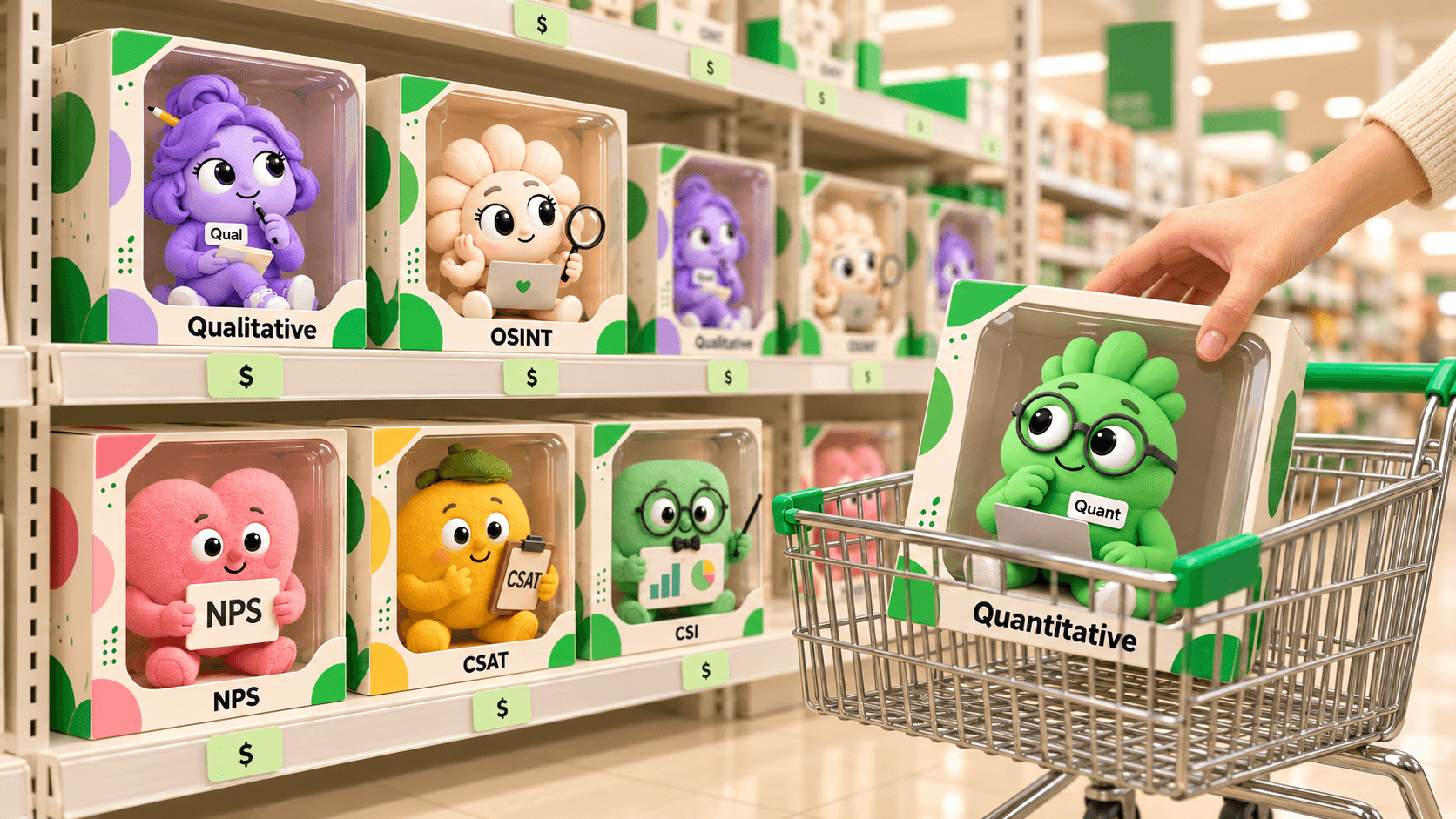
Data First, Fieldwork Second: When Research Is Actually Necessary
If you view research as a tool for mitigating financial risks, its value becomes obvious. A business doesn’t need another lengthy report left to gather dust on a shelf, which is why…
Before reaching out to researchers or launching a survey, evaluate the information you already have:
Internal Analytics: CRM data, sales reports, support interaction history, and end-to-end analytics metrics.
Desk Research: Open market data, public reports, competitor websites and social media, user reviews.
Team & Expert Expertise: Hypotheses formed through existing customer touchpoints.
You Definitely Need Marketing Research If:
The data is contradictory: Internal reports tell one story, but customer behavior in the market shows something completely different.
There is insufficient information: Existing analytics show what is happening (e.g., repeat purchases are dropping), but don't explain why, and there are no ideas on how to fix it.
The cost of an error is high: A wrong decision will lead to significant financial or reputational losses (launching a new product, rebranding, or shifting positioning are high-risk, high-cost initiatives).
You have a ready business decision: You face a specific fork in the road or a hypothesis that needs validation or debunking—not just a vague desire to "learn something new."
Golden Rule: Marketing research is the process of translating market uncertainty into actionable data needed to make a specific business decision.
Qualitative and Quantitative Research: Which to Choose and What’s the Difference?
First, determine what decision needs to be made and what missing data you need to get there. If it’s unclear why people choose a product or abandon a purchase, a qualitative approach is useful. If you already have a hypothesis and need to measure its prevalence across the target audience, a quantitative approach is the way to go. These methods can be combined, but the sequence depends on your task.
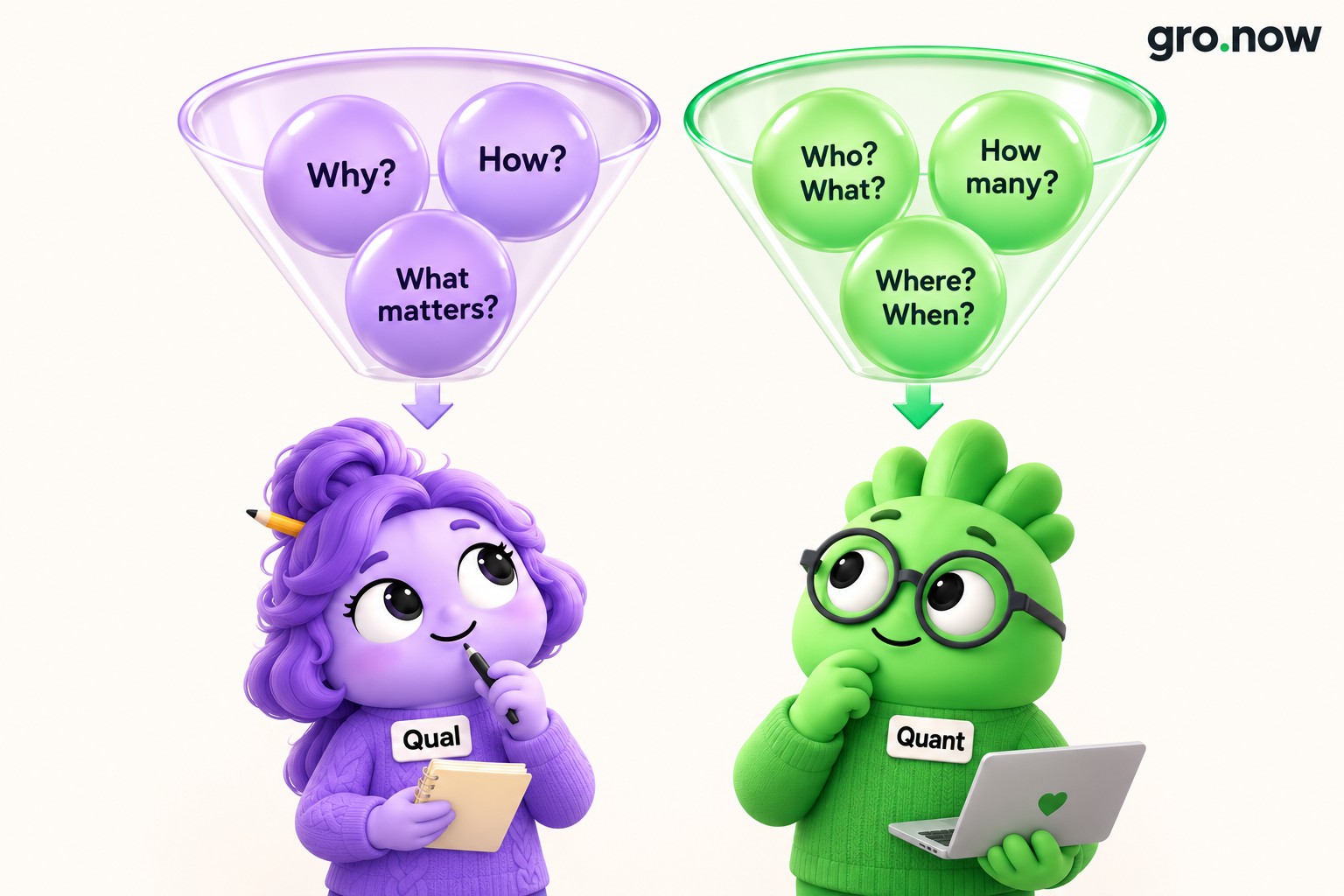
Qualitative Research
Key Questions: WHY? HOW? WHAT MATTERS?
Qualitative research focuses on gaining a deep understanding of consumers' motives, experiences, emotional triggers, and barriers. It answers how people make decisions and why they choose you or leave for competitors.
Goals:
Uncover hidden motives, choice logic, and purchase barriers.
Map the Customer Journey and identify pain points.
Generate hypotheses for subsequent testing.
Evaluate perceptions of new concepts, products, or communications.
Key Characteristics:
Small sample sizes; does not yield quantitative measurements.
Ability to adjust questions and research topics "on the fly."
Involvement of a marketer in the fieldwork phase is REQUIRED!
Main Methods: In-depth interviews, UX testing, focus groups, observations. Choose the method based on the core question: personal experience is best uncovered through interviews, ideas through group discussions, and actions in specific situations through observation.
Quantitative Research
Key Questions: HOW MUCH? WHO? WHERE? HOW OFTEN?
Quantitative research delivers numbers and scale. It is essential when a hypothesis is already formed and you need to measure the exact percentage of your target audience that agrees with it or faces the stated problem.
Goals:
Assess market parameters: market size, player shares, audience profile.
Measure awareness, satisfaction, and loyalty levels (NPS, CSAT, CSI).
Validate established hypotheses on a representative sample.
Estimate demand and test pricing hypotheses and product concepts.
Key Characteristics:
Sufficiently large and representative sample sizes (allowing findings to be extrapolated to the entire segment or market).
Standardized questions and response options.
Results presented as statistical metrics, graphs, and distributions.
Main Methods: Standardized surveys (online, phone, panel).
This approach is valuable for testing pre-formulated assumptions, comparing groups, and tracking metrics over time. For example, after conducting interviews, you can test how widespread a newly discovered buying barrier actually is.
How to Combine Methods Effectively
Research brings the highest value when methods are applied in the correct sequence:
Scenario 1: "Qual -> Quant" (From Meanings to Scale)
Step 1 (Qual): Conduct a series of interviews to identify the main reasons for purchase abandonment.
Step 2 (Quant): Launch a survey across the target audience to discover what percentage of customers leave for each identified reason, helping you prioritize where to focus resources.
Scenario 2: "Quant -> Qual" (From Anomaly to Explanation)
Step 1 (Quant): Identify a sharp decline in NPS within a specific segment based on survey data or internal metrics.
Step 2 (Qual): Conduct in-depth interviews with representatives of that segment to understand what specifically drove the negative response.
How to Conduct Research with gro.now
Once your objectives and questions are set, execution comes into play:
For Quick Hypothesis Testing and Regular Measurements: With gro.now, you can independently launch surveys, collect feedback from your audience, and analyze response datasets using AI-powered tools.
For Complex and Custom Tasks: The gro.now research team delivers turn-key projects from helping define objectives correctly and designing sample sizes to conducting fieldwork and preparing actionable business recommendations.
Summary
Research for the sake of research is a waste of resources. Before allocating a budget or drafting a brief, answer one question: "What specific decision will we make once we receive the results?"
If you need to find underlying reasons and formulate hypotheses - use a qualitative approach.
If you have hypotheses and need to measure them in numbers and percentages - launch a quantitative study.
Ready to move from assumptions to data? Discuss your task with the gro.now team we'll help you select the right method and plan a study whose results will serve as the foundation for your next business decision.